17Sep
Mini Dental Implants: What Patients in Fairfax County Should Know Before Saying Yes
Written by Kourosh Seifolahi Bazarjani, DDS – Advanced Education in General Dentistry (AEGD)
Mini dental implants offer a less invasive path to tooth replacement, but they come with mechanical limitations and ongoing maintenance demands that most guides never mention. Understanding where they work well—and where they fall short—helps you make a genuinely informed decision.
The Maintenance Reality Nobody Talks About
One of the most common misconceptions I see is that the initial surgical procedure for mini implants represents your total long-term commitment. It doesn’t.
Mini implants are most commonly used to stabilize snap-in overdentures. That snap-in mechanism relies on rubber O-ring housings seated inside the denture base that lock onto the ball-shaped head of each implant post. According to research published on NCBI, mini implants use a one-piece titanium screw with a ball-shaped head specifically designed for this overdenture retention system.
Here’s what that means in practice: those rubber O-rings wear down. Metal locator caps degrade. As your gum tissue naturally settles and reshapes around narrow-diameter posts over time, the denture base itself requires periodic soft or hard relines to maintain a proper fit. These are recurring maintenance appointments—typically needed every six to twelve months for the O-ring components, and every few years for relines.
None of this makes mini implants a bad option. It simply means the true long-term commitment is higher than the initial surgical visit alone suggests. When I evaluate a patient for any implant option, I always walk through the full picture of ongoing care requirements, not just the day-one procedure. Patients in Fairfax County VA considering implant solutions deserve that same level of transparency before committing to any treatment path.
A Critical Mechanical Limitation: What Happens When a Mini Implant Fails
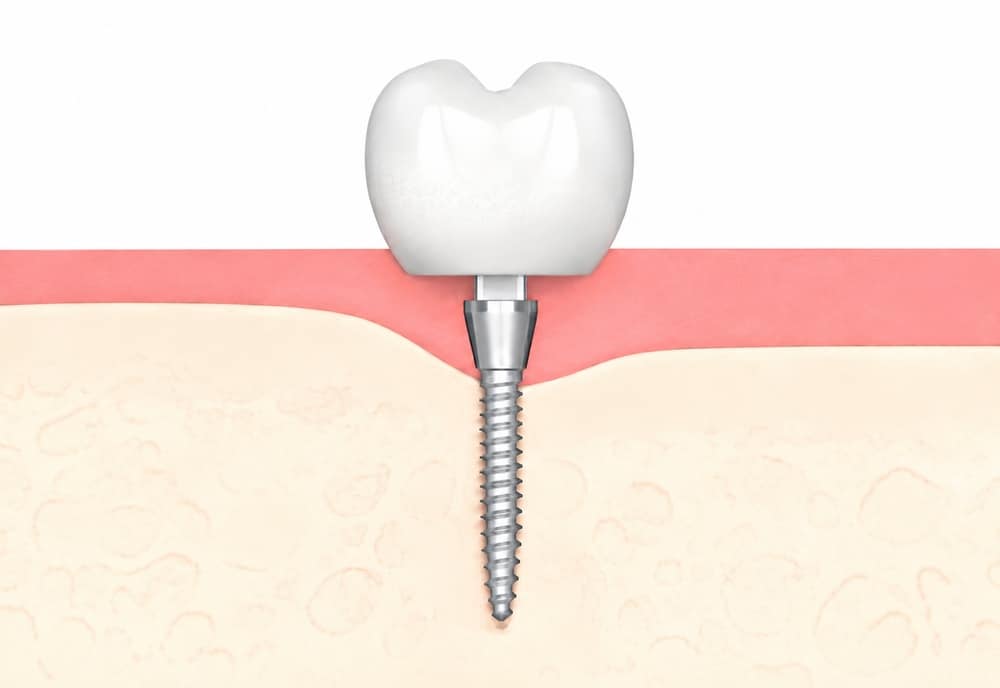
Traditional implants are two-piece systems—a post and a separate abutment. If the prosthetic component wears or fails, we unscrew the abutment and replace it. Mini implants are monolithic: post and abutment are fused into a single solid piece of titanium. A Healthline overview of mini dental implants confirms this one-piece design as a defining structural characteristic.
That single-piece design has a real consequence when failure occurs. Because there is no separate abutment to swap out, a failed mini implant requires the entire osseointegrated screw to be surgically trephined—essentially drilled—out of the jawbone. That process removes bone along with the implant. In some cases, the resulting bone loss is significant enough to prevent a standard-diameter implant from being placed in that same site without extensive grafting first.
I raise this not to alarm anyone, but because patients deserve to understand revision complexity before choosing a treatment path. For patients who may ultimately need Centreville dental implants of the standard variety, understanding this distinction upfront can save significant time and bone volume down the road.
Where Mini Implants Genuinely Shine—and Where They Struggle
Site selection matters enormously with mini implants. WebMD’s guide on types of dental implants notes that jawbone quality and quantity are central to implant decision-making—and that principle applies with particular force to narrow-diameter posts.
Mini implants perform well for lower anterior overdenture stabilization. The forces in that region are primarily axial—directed straight down the long axis of the implant—which narrow titanium posts handle reasonably well. Clinical evidence supports favorable survival rates in these applications, and research published on NCBI reports high patient satisfaction in terms of comfort, retention, chewing ability, and speech.
The picture changes significantly in the posterior jaw. Molar regions generate substantial lateral, or shear, forces during chewing—forces that act sideways across the implant rather than straight down. A sub-3mm diameter post has far less cross-sectional resistance to shear stress than a standard 3.25–5mm implant. This is why mini implants used for single molar restorations, or in patients with active bruxism, carry a meaningfully higher structural fatigue and fracture risk. Patients who grind their teeth are generally poor candidates for mini implants in any posterior position. Understanding the signs you might need a root canal versus an implant is also an important part of evaluating your full range of tooth-saving options before proceeding.
As for lifespan: Healthline’s overview of dental implant longevity reports standard implants showing survival rates above 94% at 15 years. Mini implants in appropriate sites—lower anterior overdenture support—show strong short-to-medium-term results, but long-term data matching standard implant longevity studies simply doesn’t yet exist at the same volume. Honest candidacy assessment is everything.
How I Approach Mini Implant Candidacy at Total Dental Arts
My background includes over four years in a 24/7 emergency dental center and post-doctoral training in Advanced General Dentistry. I’ve seen implant complications that could have been avoided with more thorough upfront planning.
Mini implants are a genuinely valuable tool for the right patient. WebMD’s resource on dental implants for seniors reflects what I see clinically: patients with reduced bone volume, systemic conditions limiting surgical complexity, or a need for faster recovery can benefit significantly from mini implant options. The reduced invasiveness, avoidance of bone grafting in many cases, and same-day prosthetic placement are real advantages—when the clinical site supports them. Reviewing the role of routine dental X-rays in early detection is one reason why up-to-date imaging is so critical before any implant planning begins.
What I won’t do is recommend mini implants for posterior single-tooth replacement in a bruxer, or present the initial procedure as a complete picture without discussing maintenance. Every treatment plan I develop uses AI-assisted planning tools alongside traditional clinical evaluation to ensure we’re choosing the right implant type, diameter, and site for your specific anatomy. For patients who want additional guidance on selecting the right provider, our resource on how to choose the right dentist in Virginia for long-term oral health walks through the key questions to ask.
Ready to Find Out If Mini Implants Are Right for You?
If you’re exploring tooth replacement options in Centreville or anywhere in Fairfax County, I’d welcome the conversation. At Total Dental Arts, we take time to explain every stage of your treatment—including what happens after the procedure. Reach out to schedule a consultation and get a complete, honest picture of your options. You can also learn more about our Burke dental implants services if you’re located in the surrounding area.
Medical disclaimer: This article is intended for general informational purposes only and does not constitute dental or medical advice. Individual clinical situations vary. Please consult a licensed dental professional for diagnosis and personalized treatment recommendations.