28Aug
How Painful and Invasive Is the Dental Implant Surgery Procedure?
Written by Kourosh Seifolahi Bazarjani, DDS – Advanced Education in General Dentistry (AEGD)
Dental implant surgery involves real surgery, but most patients are surprised by how manageable the experience actually is. You won’t feel pain during the procedure itself, though the sensations of pressure, vibration, and drilling sounds can catch you off guard. Understanding exactly what to expect — and how surgical technique affects your recovery — makes a significant difference. If you’re weighing your options, learning how to choose the right dentist in Virginia for long-term oral health is a smart first step.
What You Actually Feel When You Can’t Feel Pain
This is the part nobody explains well enough, and it’s the reason some patients panic mid-procedure.
Local anesthesia blocks pain signals by preventing your nerve fibers from transmitting nociceptive (pain) impulses to the brain. What it does not block is pressure sensation and vibration — because those travel through different nerve pathways and bone conduction. So when I’m placing an implant, you won’t feel a sharp or burning sensation, but you will feel heavy, sustained pressure as the implant screw seats into the bone.
Flapless vs. Traditional Surgery: How Much Invasiveness You’re Actually Signing Up For
Most articles describe implant surgery as one uniform procedure. It isn’t. The level of invasiveness, bleeding, and post-operative discomfort depends heavily on which surgical technique is used.
Traditional (flapped) surgery involves cutting the gum tissue and peeling it back to expose the bone beneath. This gives maximum visibility but creates a larger wound, requires sutures, and typically means more swelling and pain during the first week.
Flapless (guided) surgery uses a 3D CBCT scan and a printed surgical guide to punch a small, precise hole directly through the gum tissue — no cutting, no peeling, often no sutures. Cleveland Clinic notes that the healing phase after implant placement is critical, and minimizing surgical trauma directly supports faster osseointegration.
At my practice, I use AI-assisted treatment planning to evaluate whether a flapless approach is viable for each patient. Not everyone qualifies — bone density, anatomy, and implant position all factor in — but when it’s appropriate, patients consistently report dramatically less post-operative discomfort compared to traditional surgery. Patients exploring Centreville dental implants can ask about flapless eligibility during their consultation.
Before your procedure, ask your provider directly: “Are you planning a flapped or flapless approach, and what makes me a candidate for each?” That question alone tells you a great deal about what your recovery will look like.
Upper Jaw vs. Lower Jaw: Why Location Changes Everything
The surgical complexity and pain profile of upper jaw implants and lower jaw implants are genuinely different, and most general articles don’t address this.
Upper jaw (maxillary) implants — particularly in the back molar region — frequently require a sinus lift procedure first. This involves carefully elevating the sinus membrane and placing bone graft material beneath it before the implant can be seated. The Mayo Clinic identifies sinus complications as a recognized risk specifically for upper jaw placements. Post-operatively, patients with sinus lifts often experience referred pressure in the cheekbones, a feeling of nasal congestion, and occasional minor nosebleeds during the first few days. These symptoms are expected and temporary, but they feel distinctly different from ordinary dental surgery.
Lower jaw (mandibular) implants carry a different consideration: the inferior alveolar nerve runs through the lower jaw, and placement requires careful planning to maintain an adequate safety margin above it. Research published in JADA describes how neuropathic pain following implant placement can occur even without direct nerve contact, because small branches outside the main canal may be affected. The practical implication: lower jaw implants may occasionally produce temporary numbness or tingling in the lip or chin during healing. This typically resolves, but it’s something I discuss with every patient before lower posterior placement. Patients in the area can also explore Burke dental implants and Reston dental implants for additional placement options closer to home.
Note that dental implant procedures are often covered by dental insurance, though coverage varies by plan. Pain management for both locations follows similar principles. The ADA recommends NSAIDs as the first-line therapy for acute dental pain, noting they outperform opioids for most post-surgical discomfort. Most of my patients manage their recovery with ibuprofen and acetaminophen in rotation, without needing anything stronger.
What the Recovery Timeline Actually Looks Like
The first three to five days are the most uncomfortable. Swelling, jaw stiffness, and localized soreness are normal and expected. Most patients return to desk work the following day. By days seven to ten, the visible swelling and bruising resolve for the majority of people.
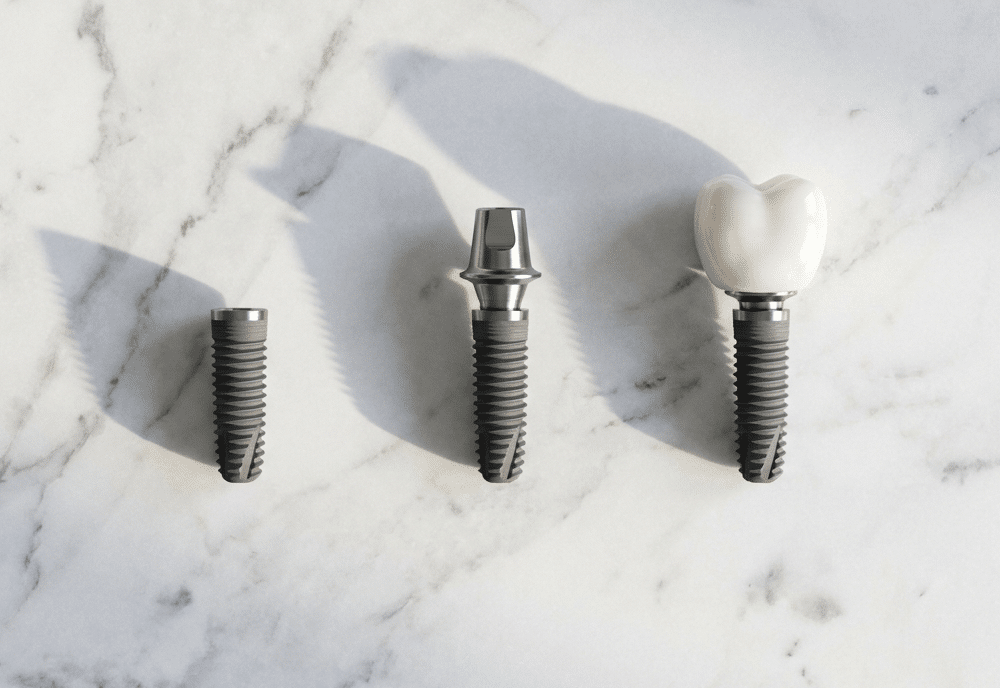
What takes much longer is osseointegration — the process where your jawbone fuses to the titanium post. According to the AAOMS, this process typically spans several months and is the reason your final crown can’t be placed immediately. During this phase, you shouldn’t feel ongoing pain. If discomfort returns or worsens after the first week, that warrants a call to your provider — it can signal infection, implant mobility, or peri-implantitis that needs early attention. Knowing the signs you might need a root canal can also help you distinguish between normal healing discomfort and a more serious issue requiring prompt care.
The procedure itself is surgery. But with the right technique, the right preparation, and clear expectations, the experience is far more manageable than most patients anticipate.
Ready to Find Out If You’re a Candidate?
If you’re considering dental implants and want a clear, honest conversation about what the procedure involves for your specific anatomy, I’d encourage you to schedule a consultation at Total Dental Arts in Centreville. We serve patients throughout Fairfax County, including Fairfax, Burke, Herndon, Manassas, and the surrounding communities. We use 3D imaging and AI-assisted planning to give you a precise picture of your surgical pathway before you commit to anything.
Medical disclaimer: This article is for informational purposes only and does not constitute medical or dental advice. Individual results and experiences vary. Consult a licensed dental professional for diagnosis and treatment recommendations specific to your situation.