17Aug
Do I Have Enough Bone Density for Dental Implants or Will I Need a Graft?
Written by Kourosh Seifolahi Bazarjani, DDS – Advanced Education in General Dentistry (AEGD)
Jawbone density is one of the most critical factors in implant success, but low bone volume doesn’t automatically disqualify you. Bone grafting — done at the right time and in the right way — can restore the foundation you need. Understanding when and why a graft may be necessary helps you make smarter decisions before tooth loss becomes a bigger problem. If you’re exploring your options in northern Virginia, our Centreville dental implants page walks through what the process looks like from evaluation to placement.
The Timing of a Bone Graft Changes Everything
Most patients ask me, “Do I need a graft?” when they should really be asking, “Did I wait too long?” That timing question has enormous consequences.
When a tooth is extracted, the socket begins collapsing almost immediately. Within the first few months, you can lose a significant percentage of the bone width in that area. If I place a socket preservation graft at the moment of extraction — packing the empty socket with bone grafting material — I can hold that space open, protect the ridge, and set you up for a straightforward implant procedure months later. It’s a minor, preventive step done under local anesthesia while you’re already numb from the extraction.
If you wait — sometimes just six to twelve months — that window closes. The bone collapses inward and downward. Now instead of a preventive socket graft, you need ridge augmentation: a reconstructive procedure that rebuilds a ridge that no longer exists. This is a more involved surgery, requires a longer healing period, and adds significantly more time to your overall treatment timeline. According to Cleveland Clinic, dental bone grafts can take up to a year to fully heal, which means delayed action compounds your wait time considerably.
The clinical lesson is simple: if you know a tooth needs to come out, talk to me about socket preservation before the extraction appointment. Acting during that window is always the better path than reconstructing afterward. Patients in the area can also learn more about Reston dental implants and how early planning affects outcomes there as well.
The Upper Jaw Has a Hidden Enemy: Your Own Sinuses
When patients come to me missing upper back teeth — upper molars or premolars — I often see a bone loss pattern that surprises them. Yes, the ridge shrinks from the outside as expected. But the upper jaw also loses bone from the inside out, through a process called sinus pneumatization.
Your maxillary sinuses sit just above the roots of your upper back teeth. When those teeth are lost, the sinus cavity senses the empty space and gradually expands downward, eroding bone from below. This means upper jaw bone loss is a two-front battle: the gum-side ridge collapses inward while the sinus floor drops lower. The result is often only a few millimeters of usable bone — far too little to anchor an implant safely.
The solution is a sinus lift, also called sinus augmentation. I access the sinus membrane, gently elevate it upward, and pack bone grafting material into the newly created space beneath it. Over several months, that graft mineralizes into solid bone, reclaiming the vertical height the sinus stole. WebMD explains that a sinus lift raises the sinus floor to create room for bone that can then support implants. Once healed, implant placement in that area becomes predictable and stable.
If you’ve been told you’re “not a candidate” for upper jaw implants because of thin bone, a sinus lift may change that answer entirely. Understanding the role of routine dental X-rays in early detection is also key — catching bone loss early through imaging can mean the difference between a minor graft and a major reconstruction.
If You Take Osteoporosis Medication, Read This First
Many patients assume that medications prescribed to strengthen bone — like alendronate (Fosamax), ibandronate (Boniva), or denosumab (Prolia) — would help their candidacy for implants. This is one of the most important misconceptions I address in consultations.
These drugs work by suppressing bone turnover. They slow the cells that break down old bone, which increases measured bone density. But dental implants and bone grafts depend on active bone turnover — your body must remodel living bone around the implant for osseointegration to occur. When turnover is suppressed, that healing process is compromised.
More seriously, these medications carry a risk of Medication-Related Osteonecrosis of the Jaw (MRONJ) — a condition where jawbone exposed during surgery fails to heal and essentially dies. A Healthline overview on osteoporosis and dental implants notes that intravenous bisphosphonate therapy in particular raises this risk significantly.
Before any implant or grafting surgery, I ask patients on these medications to discuss a “drug holiday” with their prescribing physician — a temporary pause in medication to allow bone turnover to normalize. Key questions to bring to that appointment:
- How long have I been on this medication?
- Am I on an oral or intravenous form?
- Is a drug holiday appropriate for my bone health status?
- How long before surgery should I pause, and when can I resume?
This conversation must happen before implant planning begins. Skipping it can lead to serious complications that are far harder to treat than the original tooth loss. If you’re unsure whether implants are right for your situation, reviewing how to choose the right dentist in Virginia for long-term oral health can help you find a provider equipped to navigate these complexities.
How Implants Actually Protect the Bone You Have Left
Here’s what most patients don’t realize until after they’ve had an implant: the implant itself becomes a tool for preserving jawbone going forward.
When a natural tooth root is present, chewing forces travel through it into the bone, stimulating the bone to maintain its density. Remove that root — through extraction or tooth loss — and the stimulation stops. The bone begins to resorb because your body no longer sees a reason to maintain it. Research published on NCBI confirms that implants offer improved maintenance of bone at edentulous sites compared to conventional prosthetics.
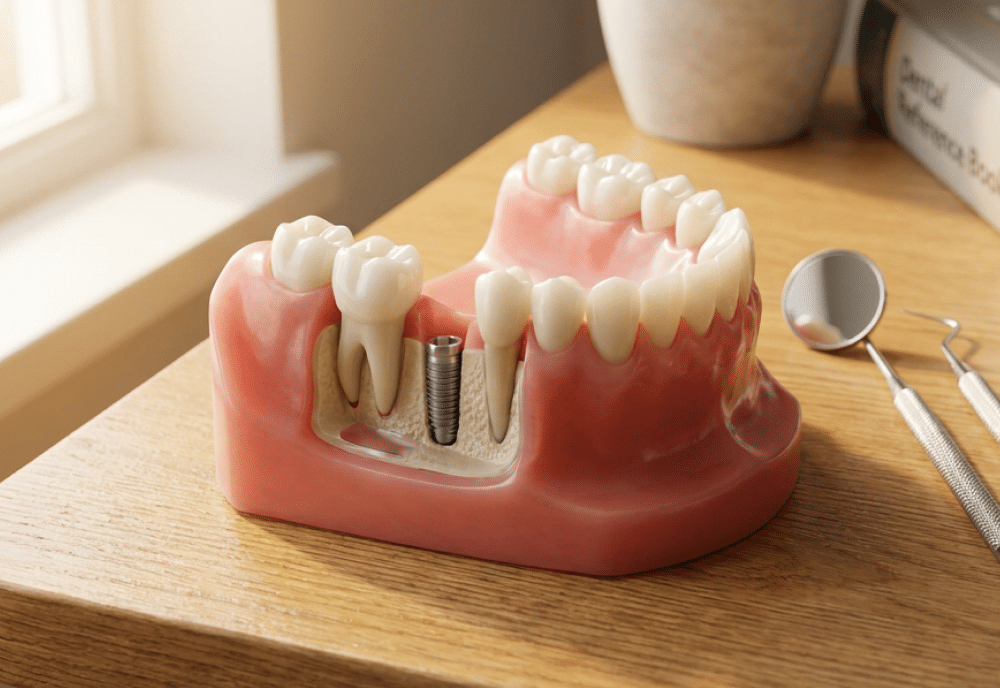
A titanium implant replicates that mechanical stimulation. Once osseointegration is complete — meaning the bone has grown tightly around the implant post — every bite you take sends load-bearing signals into the surrounding bone. Mayo Clinic notes that because titanium fuses with your jawbone, implants won’t cause bone damage the way fixed bridgework or dentures might.
This is why I encourage patients not to view an implant purely as a cosmetic fix. It’s a structural investment in the long-term health of your jaw. Waiting longer to replace a missing tooth means more bone loss, which may mean a more complex graft — and the cycle continues. Patients who also experience pain or infection while delaying treatment should know that emergency dental care in Centreville VA is available to address urgent issues before they compromise your implant candidacy further.
Ready to Find Out Where You Stand?
If you’re wondering whether your bone density is sufficient for implants, the only way to know for certain is a clinical evaluation with 3D imaging. At Total Dental Arts in Centreville, I use AI-assisted treatment planning and cone beam imaging to assess your bone volume precisely and map out exactly what — if anything — needs to be done before implant placement. Patients throughout Fairfax County, from Herndon to Burke to Manassas, come to us for honest, thorough answers. Reach out to schedule your consultation.
Medical disclaimer: This article is for informational purposes only and does not constitute medical or dental advice. Always consult a qualified dental professional for diagnosis and treatment recommendations specific to your individual health needs.